
Do you really need the 2026 Mazda CX-30’s AWD for daily driving, or is the 2026 Chevrolet Trax the smarter choice around Ontario, CA?
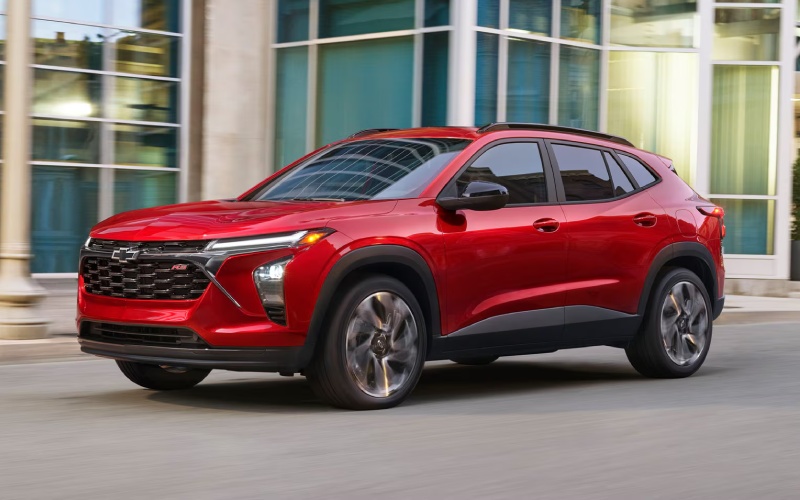
Orel Hershiser Chevrolet – Do you really need the 2026 Mazda CX-30’s AWD for daily driving, or is the 2026 Chevrolet Trax the smarter choice around Ontario, CA?
It’s one of the most common questions shoppers ask when they’re cross-shopping these two small SUVs: Will standard AWD on the Mazda really matter as much as the Chevy’s everyday strengths? If your routine looks like most Southern California driving—firm, dry pavement; short freeway stints; crowded lots; and higher-speed merges—traction is rarely the limiting factor. What matters far more is cabin quiet, quick-to-use tech, and confidence you can feel in the first 30 feet. That’s where the 2026 Chevrolet Trax separates itself with an available 11-inch touch-screen, standard wireless Apple CarPlay®/Android Auto™, and Active Noise Cancellation working in the background. The Mazda CX-30’s i-Activ AWD® is well-tuned and always ready, but its non-touch center display and rotary controller add more steps to simple tasks like map zooming or address entry—actions you do every day.
Think about a typical Ontario commute. You accelerate down a short on-ramp, slide two lanes over, and settle in with a podcast. The Trax’s ECOTEC® 1.2L Turbo pairs responsive low-end torque with a smooth-shifting automatic, so those half-throttle moves feel easy without a lot of noise. Mazda’s naturally aspirated 2.5L and available turbo are strong too; if you value sportier dynamics, the CX-30 delivers. But consistent, low-effort drivability—where you don’t have to dig deep into the throttle or fight with a controller to switch playlists—is Trax territory. And if your daily loop includes quick stops and parking in tight downtown spaces, the Trax’s sightlines and light steering reduce end-of-day fatigue.
What AWD really changes in Southern California
AWD adds traction when a front or rear tire slips. In snow and off-pavement conditions, that can be the difference between moving and spinning in place. Around Ontario, Rancho Cucamonga, and the Inland Empire, inclement-weather traction is less of a constant. AWD does not shorten braking distances on dry pavement and only slightly aids corner-exit traction in typical commuting. For many shoppers here, additional traction is a nice-to-have, not a need-to-have.
Where the Trax’s strengths show up daily
Infotainment you can operate at a glance matters every single drive. The Trax’s available 11-inch touch-screen is large, bright, and responsive; pairing your phone takes seconds, and wireless Apple CarPlay®/Android Auto™ is standard across the lineup. With available wireless charging and a built-in Wi-Fi® hotspot, your cabin stays cable-light and connection-strong for passengers. Mazda’s Connected Services and available Alexa Built-in are useful, but the non-touch display requires a few extra twists and clicks to do what the Trax lets you tap and go.
- Infotainment speed and simplicity: The Trax’s touch-screen makes quick work of map inputs and audio changes; the CX-30’s controller demands more steps.
- Cabin quiet and comfort: Active Noise Cancellation helps the Trax stay calm on concrete freeways, supporting easier conversations and calls.
- Everyday flexibility: With up to 54 cu. ft. of max cargo space and a 60/40 split-folding rear seat, Trax handles bulky boxes and long weekend errands with less rearranging.
Performance, control, and confidence
Both vehicles are stable and predictable at speed. The Trax’s steering is tuned to be light in lots and secure on the freeway, so the SUV feels easy to place in a lane or slot into a curbside space. The CX-30’s handling leans sportier—great for drivers who push their pace more on winding roads. For most Ontario-area commuters, the Trax’s quiet composure and torque-on-tap powerband better match the flows of the 10, 60, and 71.
Frequently Asked Questions:
Will AWD help me stop faster in dry conditions?
No. AWD improves how a vehicle accelerates on low-traction surfaces, but it does not shorten braking distances on dry pavement. Braking is governed by tire grip and the brake system itself.
Is the Trax’s FWD layout a disadvantage in rain?
Not in typical SoCal showers. Modern stability and traction systems—plus Chevy Safety Assist with Automatic Emergency Braking and Front Pedestrian Braking—help you drive confidently. Always match speed to conditions and follow safe distances.
Which has the more user-friendly tech for daily life?
The Trax. Its available 11-inch touch-screen and standard wireless phone mirroring, letting you tap and go. The CX-30’s non-touch display requires a rotary controller for most functions, adding steps to map entries and app selection.
What about cargo space and family use?
Trax offers up to 54 cu. ft. of max cargo space—roomy for a small SUV—plus wide rear-door openings that simplify loading. The CX-30 is more compact inside when the seats are folded, which may matter if you carry strollers, music gear, or sports equipment regularly.
If you’re deciding between AWD’s niche benefits and the Trax’s all-day advantages—clearer tech, flexible space, and a quiet, relaxed drive—the Chevy typically matches the Inland Empire lifestyle better. Visit Orel Hershiser Chevrolet for a side-by-side drive and feel the difference in the first mile—our team is serving Upland, Ontario, and Montclair with test drives that reflect real-world routes you take every week.
0 comment(s) so far on Do you really need the 2026 Mazda CX-30’s AWD for daily driving, or is the 2026 Chevrolet Trax the smarter choice around Ontario, CA?